
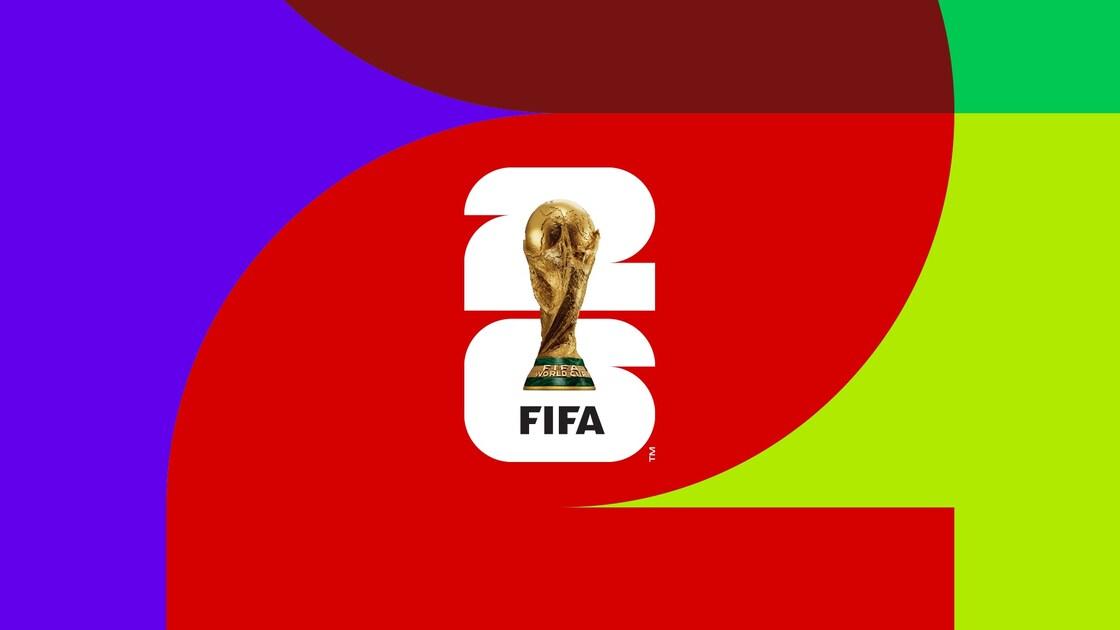
The FIFA World Cup 2026 logo is one of the most discussed sports branding identities in recent years. Every FIFA World Cup has its own visual personality, and each tournament logo reflects the host nation, the era, the design trends of the time, and the global emotion connected to football.
The 2026 FIFA World Cup is especially important because it will be hosted across three countries: the United States, Canada, and Mexico. It is also the first FIFA World Cup to feature 48 teams, making it the biggest tournament in the history of football. Because of this scale, the FIFA World Cup 2026 logo needed to work as more than a simple tournament badge. It needed to become a flexible global brand system.
For designers, business owners, sports organizations, and branding agencies, the FIFA World Cup 2026 logo provides a powerful case study. It shows how modern brands are moving toward simplicity, scalability, recognition, and digital flexibility. At the same time, looking at all FIFA World Cup logos from 1930 to 2026 helps us understand how logo design has changed over nearly a century.
This article will analyze the FIFA World Cup 2026 logo, review all FIFA World Cup logos, explore sports branding lessons, and explain how businesses can use these principles when investing in custom logo design USA services.
If your business needs a professional, memorable, and scalable logo, DigiHexagon provides custom logo design services for startups, small businesses, sports brands, corporate companies, and growing organizations. You can explore our logo design services here: Custom Logo Design Services USA

FIFA World Cup 2026 Logo Overview
The FIFA World Cup 2026 logo features a bold number “26” combined with the iconic FIFA World Cup Trophy. Unlike many previous World Cup logos, the 2026 design does not rely heavily on illustrated cultural symbols. Instead, it uses a minimal, direct, and adaptable visual system.
The logo was created for a tournament that will be experienced across stadiums, television, mobile apps, social media, streaming platforms, merchandise, signage, and global advertising campaigns. For that reason, the design had to be highly flexible.
The FIFA World Cup 2026 logo includes several important design characteristics:
It is simple.
>It is recognizable.
>It is scalable.
>It is easy to apply across host city branding.
>It places the FIFA World Cup Trophy at the center of the identity.
>It creates a consistent visual system for the largest World Cup ever.
For many fans, the 2026 logo felt very different from past tournament logos. Some people expected a more colorful or cultural design because the tournament is being hosted by three countries. However, from a branding perspective, FIFA’s decision makes sense. A tournament with multiple host countries, multiple host cities, and hundreds of design applications needs a brand identity that can remain consistent everywhere.
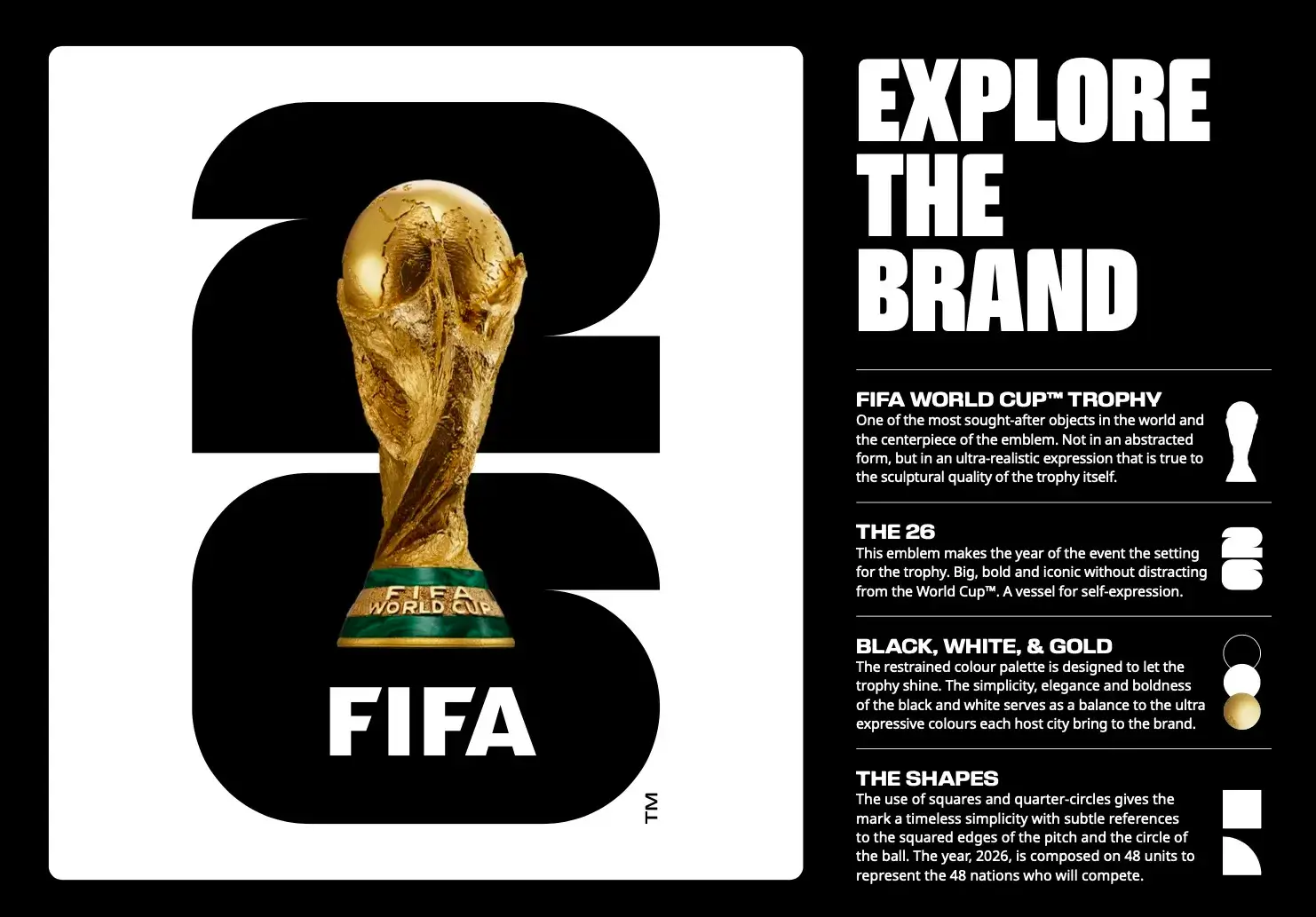 Why the FIFA World Cup 2026 Logo Is Different
Previous FIFA World Cup logos were often more illustrative. They used local culture, national colors, architecture, traditional patterns, or artistic symbolism. The FIFA World Cup 2026 logo is different because it is more system-based.
This means the logo is not only designed as one standalone emblem. It is part of a wider visual identity that can expand across host cities, campaign graphics, posters, merchandise, digital content, and event branding.
Modern branding is no longer just about creating one nice-looking logo. A successful brand identity must work across many platforms. This is true for global organizations like FIFA, and it is also true for businesses looking for custom logo design in the USA.
A professional logo today must work on:
Websites
Mobile screens
Social media profiles
Business cards
Email signatures
Print materials
Packaging
Signage
Presentation decks
Digital ads
Video intros
Merchandise
Complete FIFA World Cup Logo History: 1930 to 2026
Below is a complete FIFA World Cup logo section you can add to the blog. Each tournament should include an image, alt text, and a short branding analysis.
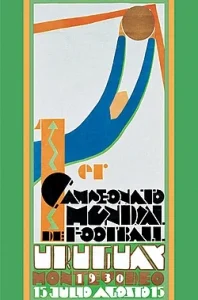
FIFA World Cup 1930 Uruguay Logo
The 1930 Uruguay World Cup logo, which had a strong vintage poster style. It reflected the graphic design language of the time, with bold illustration and dramatic composition. Unlike modern digital logos, early World Cup identities were closer to event posters than scalable brand marks.
Branding Lesson: Early sports logos focused on atmosphere and event promotion rather than flexible brand systems.

FIFA World Cup 1934 Italy
Unlike the 1934 Italy logo represented the era’s graphic design style with illustrated elements and strong national character. It was more decorative than modern logos and was mainly designed for posters, tickets, and printed tournament materials.
Branding Lesson: A logo should reflect the communication channels of its time.

FIFA World Cup 1938 France
Meanwhile, the 1938 France logo used artistic illustration to communicate movement, competition, and international football. It showed how sports branding was still heavily connected to poster art before television and digital media changed everything.
Branding Lesson: Sports branding has always been emotional, but the execution changes with technology.

FIFA World Cup 1950 Brazil
Furthermore, the 1950 Brazil logo was colorful, expressive, and connected to the football itself. It reflected the joy and passion of Brazilian football while still maintaining a vintage design style.
Branding Lesson: Strong sports branding should connect emotionally with fans.

FIFA World Cup 1954 Switzerland
The 1954 Switzerland logo showed more structure and order compared with earlier tournament designs. Swiss design has long been associated with clarity, grid systems, and balanced composition, and this identity reflected that design direction.
Branding Lesson: A logo can communicate national identity through design
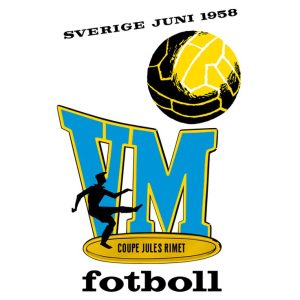
FIFA World Cup 1958 Sweden
The 1958 Sweden logo was direct, sports-focused, and visually clear. It showed how tournament logos were gradually becoming more logo-like rather than only poster-like.
Branding Lesson: Simplicity improves recognition.
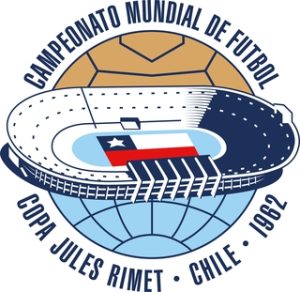
FIFA World Cup 1962 Chile
The 1962 Chile World Cup logo connected football with global competition. It reflected the idea that the World Cup was becoming a truly international event with growing global attention.
Branding Lesson: Global brands need symbols that communicate beyond language.
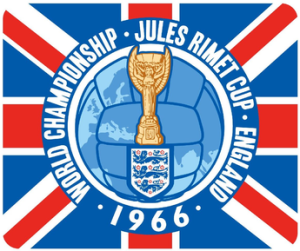
FIFA World Cup 1966 England
The 1966 England logo had a more traditional emblem quality. It used national identity and structured design to communicate prestige and authority.
Branding Lesson: Emblem-style logos can create a sense of heritage and trust.
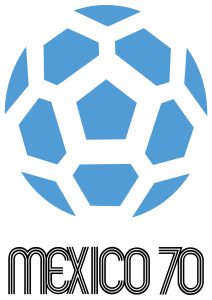
FIFA World Cup 1970 Mexico
One of the most iconic designs, the 1970 Mexico logo is one of the most memorable World Cup identities. Its geometric football pattern and distinctive typography made it instantly recognizable. It felt modern, simple, and culturally connected.
Branding Lesson: Great typography can make a logo unforgettable.
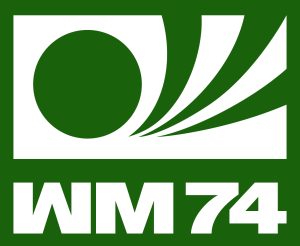
FIFA World Cup 1974, West Germany
In contrast, the 1974 logo used a minimal, bold, and modern style. As a result, it reflected the design trends of the 1970s and showed how sports branding was moving toward stronger graphic simplicity.
Branding Lesson: Minimal design can still feel powerful when the composition is strong.

FIFA World Cup 1978 Argentina
Furthermore, the Argentina 1978 logo combined national colors with football symbolism in a clean and recognizable manner. Consequently, it became a simple, balanced, and easy-to-understand identity.
Branding Lesson: Color can create instant national association.
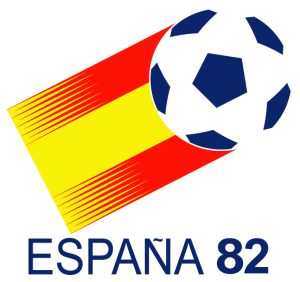
FIFA World Cup 1982 Spain
Meanwhile, the 1982 Spain logo embraced a colorful and dynamic style filled with movement. Consequently, it captured both the passion of Spanish culture and the excitement of international football.
Branding Lesson: Energy and movement are powerful tools in sports logo design.
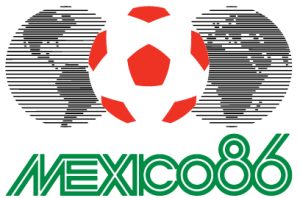
FIFA World Cup 1986 Mexico
Additionally, the 1986 Mexico logo combined a football with global shapes, creating a simple yet effective tournament identity. As a result, it appeared more corporate and polished than many earlier World Cup logos.
Branding Lesson: Repetition of host identity can still feel fresh with a new design system.
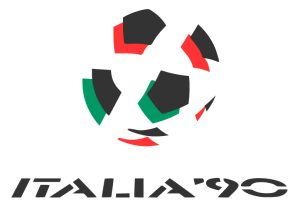
FIFA World Cup 1990 Italy
Furthermore, the Italy 1990 logo is remembered for its modern and abstract football shape. As a result, Italy’s national colors made it more recognizable, while the geometric style gave the design a contemporary feel.
Branding Lesson: Abstract symbols can work when supported by strong color and shape.
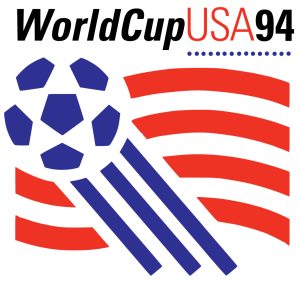
FIFA World Cup 1994 USA
The USA 1994 logo was patriotic and direct. It used red, white, and blue with a moving football shape to communicate the tournament’s American host identity.
Branding Lesson: A logo can successfully use national symbolism when it is clear and balanced.
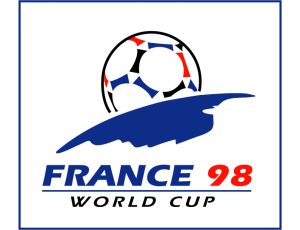
FIFA World Cup 1998 France
The France 1998 logo was colorful and approachable. It had a playful, international feel while still representing France as the host nation.
Branding Lesson: Friendly design helps global brands feel more accessible.
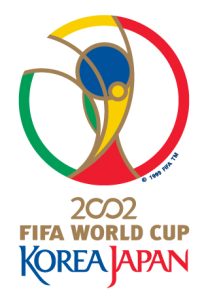
FIFA World Cup 2002 Korea Japan
The 2002 World Cup was the first hosted by two countries. Its logo needed to represent both Korea and Japan while maintaining FIFA’s global identity. The result was more refined and corporate than many earlier tournament logos.
Branding Lesson: Multi-country events need flexible and balanced visual systems.
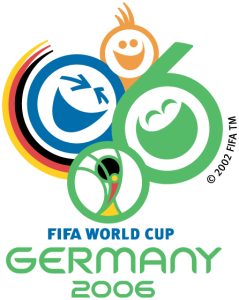
FIFA World Cup 2006 Germany
The Germany 2006 logo was playful and human. It moved away from purely formal sports branding and introduced a warmer emotional tone.
Branding Lesson: A logo can create emotional connection through friendliness and personality.
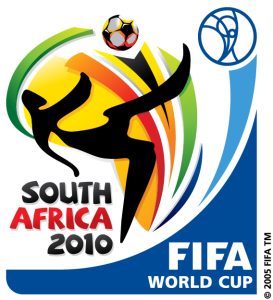
FIFA World Cup 2010 South Africa
The South Africa 2010 logo featured a football player performing a dynamic kick. It used bright colors and strong movement to represent African culture, football passion, and celebration.
Branding Lesson: Strong sports logos often combine movement with cultural storytelling.
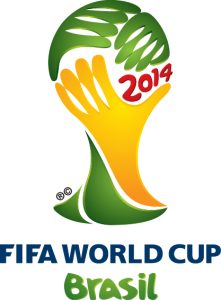
FIFA World Cup 2014 Brazil
The Brazil 2014 logo was highly recognizable. Its design used three hands forming the shape of the World Cup Trophy. It represented unity, celebration, and Brazil’s football passion.
Branding Lesson: Symbolic storytelling can make a logo more meaningful.
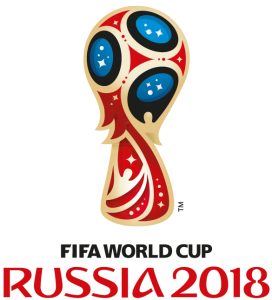
FIFA World Cup 2018 Russia
The Russia 2018 logo used rich colors and decorative elements. It created a premium, almost cosmic identity, referencing Russia’s history with space exploration and national culture.
Branding Lesson: Cultural depth can make a sports logo feel more distinctive.
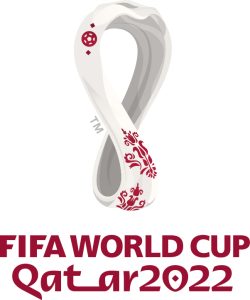
FIFA World Cup Qatar 2022
Similarly, the Qatar 2022 logo was elegant and symbolic. Its shape referenced the infinity symbol, the number eight, and traditional Middle Eastern textile forms. As a result, it became one of the most refined FIFA World Cup logos in recent history.
Branding Lesson: Elegant simplicity can create a premium international identity.

FIFA World Cup 2026 USA / Canada / Mexico
Ultimately, the FIFA World Cup 2026 logo represents a major shift toward digital-first branding. Instead of relying on detailed cultural illustrations, it introduces a flexible identity system that can be used across three host countries, multiple host cities, and thousands of marketing applications worldwide.
Branding Lesson: Modern logos must be flexible enough for digital, print, motion, merchandise, and large-scale campaigns.
FIFA World Cup Logo Evolution: What Changed Over Time?
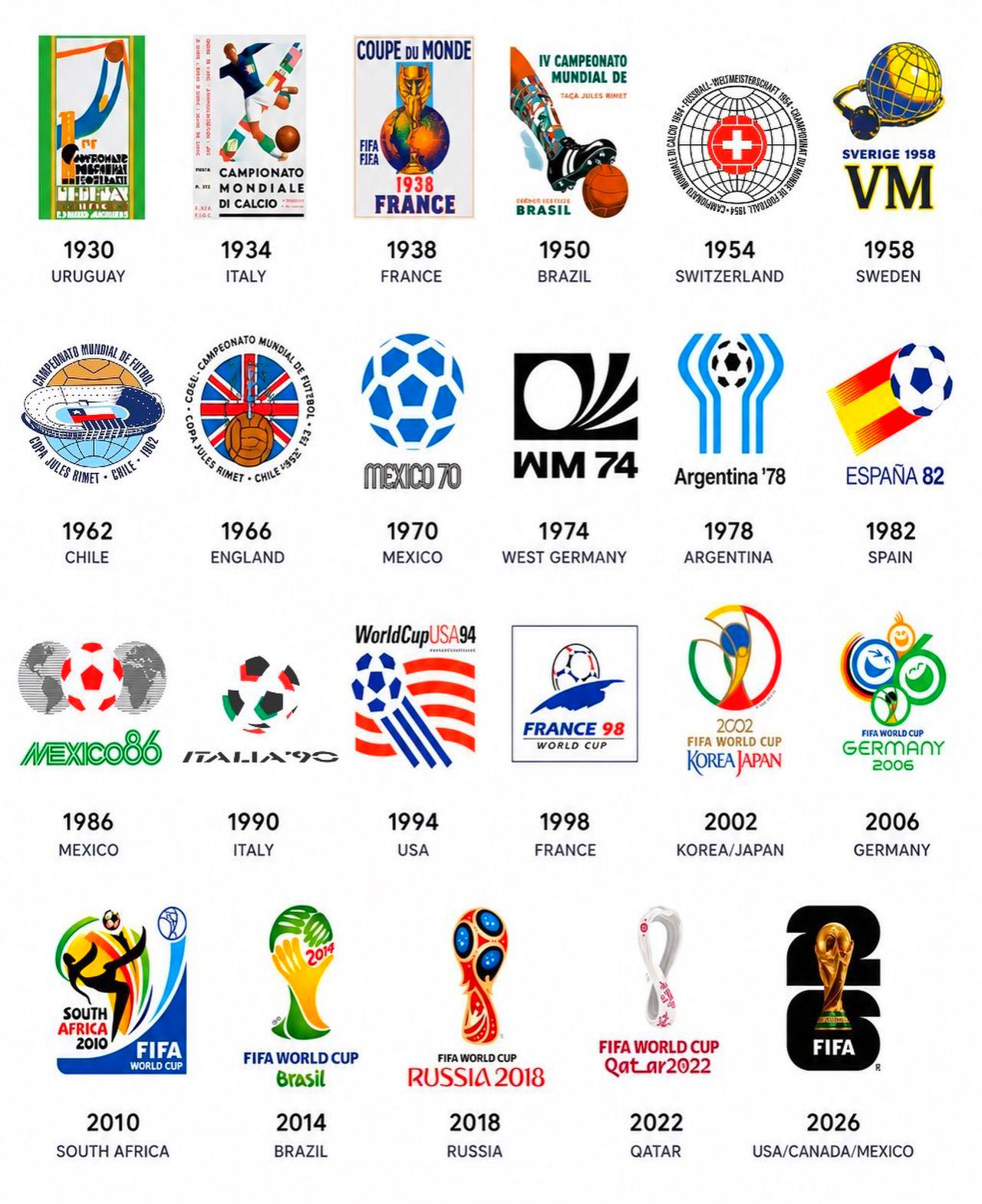
When we look at all FIFA World Cup logos from 1930 to 2026, we can clearly see the evolution of global logo design.
Early World Cup logos were more like posters. They used illustration, dramatic composition, and printed-event styling. As television became more important, logos became simpler and more recognizable. In the digital era, logos became cleaner, flatter, and more scalable.
This same evolution can be seen in business logo design. Companies today cannot rely on overly complex logos. A business logo must look professional on a website, social media profile, email signature, business card, invoice, signboard, and advertisement.
That is why professional custom logo design USA services are important for modern businesses. A logo is not just decoration. It is a long-term business asset.
 Design Lessons from All FIFA World Cup Logos
1. Every Era Has a Different Design Language
The 1930s logos were artistic and poster-driven.
The 1970s logos became more geometric and modern.
The 1990s logos became more commercial and broadcast-friendly.
The 2000s logos became more global and polished.
The 2020s logos are more flexible, digital, and system-based.
A good logo must feel current, but it should not become outdated too quickly.
2. Simplicity Improves Recognition
The most memorable World Cup logos are usually the ones with clear shapes and strong visual hierarchy. Mexico 1970, USA 1994, Brazil 2014, Qatar 2022, and FIFA 2026 all prove that clarity matters.
This is also true for business logo design. A custom business logo should be simple enough to recognize quickly but unique enough to stand apart from competitors.
3. Color Creates Emotional Connection
World Cup logos often use national colors, cultural colors, or energetic sports colors. Color helps fans immediately understand the host identity.
For businesses, color psychology is equally important. Blue can communicate trust. Red can communicate energy. Green can communicate growth. Black can communicate luxury. Gold can communicate premium value.
Professional logo designers choose colors strategically, not randomly.
4. Typography Matters
Many World Cup logos use custom or distinctive typography. Typography can make a design feel modern, classic, premium, playful, corporate, or bold.
For businesses, typography is one of the most important parts of professional logo design. A weak font can make even a good icon look unprofessional.
5. A Logo Must Work Everywhere
The FIFA World Cup 2026 logo was created for global usage across many platforms. Businesses need the same thinking.
A professional logo should work on:
Website headers
Social media profiles
Business cards
Letterheads
Email signatures
Invoices
T-shirts
Packaging
Signboards
Mobile apps
Digital ads
This is why vector-based professional logo design is essential.
Why the FIFA World Cup 2026 Logo Is Useful for Business Branding
The FIFA World Cup 2026 logo teaches business owners one important lesson: your logo should not only look good; it should function properly.
Many businesses make the mistake of choosing a logo only because it looks stylish. But a logo must also be practical. It must be readable, scalable, memorable, and consistent.
At DigiHexagon, our custom logo design services focus on both creativity and usability. We create logos that look modern but also work across real business applications.
Explore our professional logo design services here: Custom Logo Design Services USA
Custom Logo Design USA: What Businesses Can Learn from FIFA
Businesses in the USA compete in a crowded market. Whether you are a startup, local contractor, law firm, healthcare provider, real estate company, restaurant, tech company, fitness brand, or sports organization, your logo plays a major role in first impressions.
A professional custom logo design USA service helps your brand:
Look more credible
Stand out from competitors
Build trust faster
Improve customer recognition
Create a consistent identity
Support marketing campaigns
Increase perceived value
The FIFA World Cup logo history proves that branding is not just about art. It is about communication.
Professional Logo Design Services for Modern Businesses
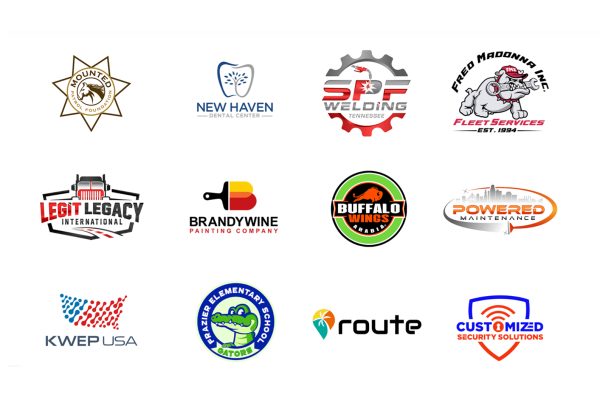
Professional logo design services should include more than one basic image file. A complete logo design package should include:
Primary logo
Secondary logo
Icon or mark
Horizontal version
Vertical version
Black version
White version
Full-color version
Vector files
PNG files
PDF files
Social media profile version
Brand color codes
Font recommendations
Basic brand guidelines
This ensures your logo can be used properly across all business platforms.
Sports Logo Design Inspiration from FIFA
FIFA World Cup logos are a great source of inspiration for sports logo design. Sports logos need to communicate energy, competition, community, pride, and emotion.
A strong sports logo should be:
Bold
Memorable
Easy to recognize
Emotionally powerful
Scalable
Unique
Flexible for merchandise
Sports brands often use shields, animals, trophies, balls, motion lines, mascots, abstract symbols, and bold typography. However, the best sports logos avoid unnecessary complexity.
Business Logo Design vs Sports Logo Design
Business logo design and sports logo design are different, but they share some important principles.
A business logo usually focuses on trust, professionalism, clarity, and market positioning.
A sports logo usually focuses on energy, pride, competition, and emotion.
However, both need:
Strong concept
Clear typography
Scalable structure
Balanced colors
Unique identity
Professional execution
That is why working with a professional logo design company in the USA / Canada / Mexico can make a major difference.
Common Logo Design Mistakes Businesses Should Avoid
Using Generic Templates
Template logos often look cheap and forgettable. They may also be used by many other businesses.
Overcomplicating the Design
Too many details make a logo hard to recognize.
Choosing Poor Fonts
Typography can make or break a logo.
Ignoring Scalability
A logo must work at small and large sizes.
Using Too Many Colors
Too many colors can make printing expensive and reduce visual clarity.
Not Getting Vector Files
Without vector files, your logo may become blurry or unusable for print.
How DigiHexagon Creates Custom Logo Designs
At DigiHexagon, our logo design process is built around strategy and creativity.
Step 1: Brand Discovery
We learn about your business, target audience, competitors, industry, and goals.
Step 2: Research
We study your market and identify opportunities to make your brand stand out.
Step 3: Concept Development
We create multiple logo directions based on your brand positioning.
Step 4: Refinement
We improve the selected concept with better spacing, typography, colors, and balance.
Step 5: Final Delivery
We provide professional logo files ready for print, digital, web, and branding usage.
You can view our custom logo design services here: Custom Logo Design Services USA
FAQ: FIFA World Cup 2026 Logo and Custom Logo Design
What is the FIFA World Cup 2026 logo?
The FIFA World Cup 2026 logo is the official tournament identity for the 2026 FIFA World Cup hosted by the United States, Canada, and Mexico. It features the FIFA World Cup Trophy combined with the number 26.
Why is the FIFA 2026 logo different from previous World Cup logos?
It is more minimal, flexible, and digital-first. It is designed to work across multiple host countries, host cities, and global branding applications.
Why are all FIFA World Cup logos important for designers?
They show how sports branding evolved from illustrated event posters to modern, scalable logo systems.
What can businesses learn from FIFA World Cup logos?
Businesses can learn the importance of simplicity, scalability, memorability, color psychology, typography, and consistent branding.
What is a custom logo design USA?
Custom logo design USA refers to professional logo design services created for businesses in the United States. These services help companies build unique, memorable, and professional brand identities.
Why should I hire a professional logo design company?
A professional logo design company creates a unique, scalable, and strategic logo that supports your business growth and branding.
Can DigiHexagon design sports logos?
Yes. DigiHexagon creates custom sports logos, business logos, corporate logos, startup logos, and complete brand identity systems.
Where can I order custom logo design services?
You can explore DigiHexagon’s professional logo design services here: Custom Logo Design Services USA
Conclusion
In the end, the FIFA World Cup 2026 logo shows how global sports branding is changing. Older World Cup logos relied on cultural details, poster-style artwork, and national themes. In comparison, the 2026 identity uses a cleaner and more flexible system built for digital platforms, host cities, and global marketing.
By reviewing all FIFA World Cup logos from 1930 to 2026, we can clearly see how logo design has evolved over time. The best logos are not always the most complex. They are the ones that communicate clearly, remain memorable, and work across every platform.
For businesses, the lesson is simple. A logo is not just a graphic. It is a business asset. It influences how customers see your company, how professional your brand feels, and how easily people remember you.
Ultimately, a strong logo builds trust, a professional identity creates recognition, and a memorable brand helps your business grow.
Visit our logo design page here: Custom Logo Design Services USA
A strong logo builds trust. A professional identity creates recognition. A memorable brand helps your business grow.





 +1 484-778-4600